
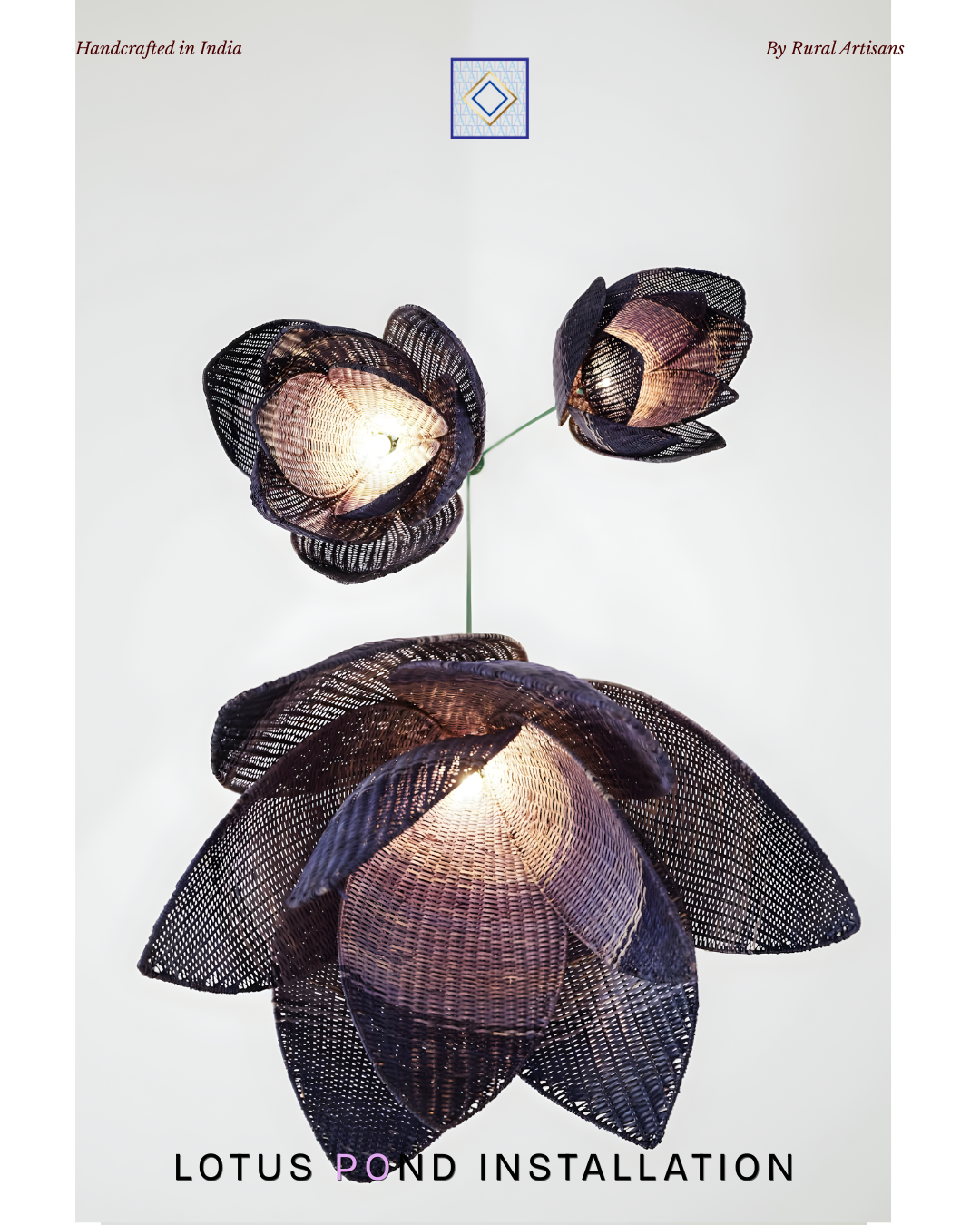
The World Is Finally Looking at India’s Lights
Why global buyers are turning to Indian Lighting & Craft
For decades, India’s artisans have created craft with their hands. Coaxing molten glass in Firozabad, shaping vibrant cobalt ceramics in Jodhpur and weaving dreams into textiles in Kanchipuram. The world barely noticed. Today, the world can’t look away.
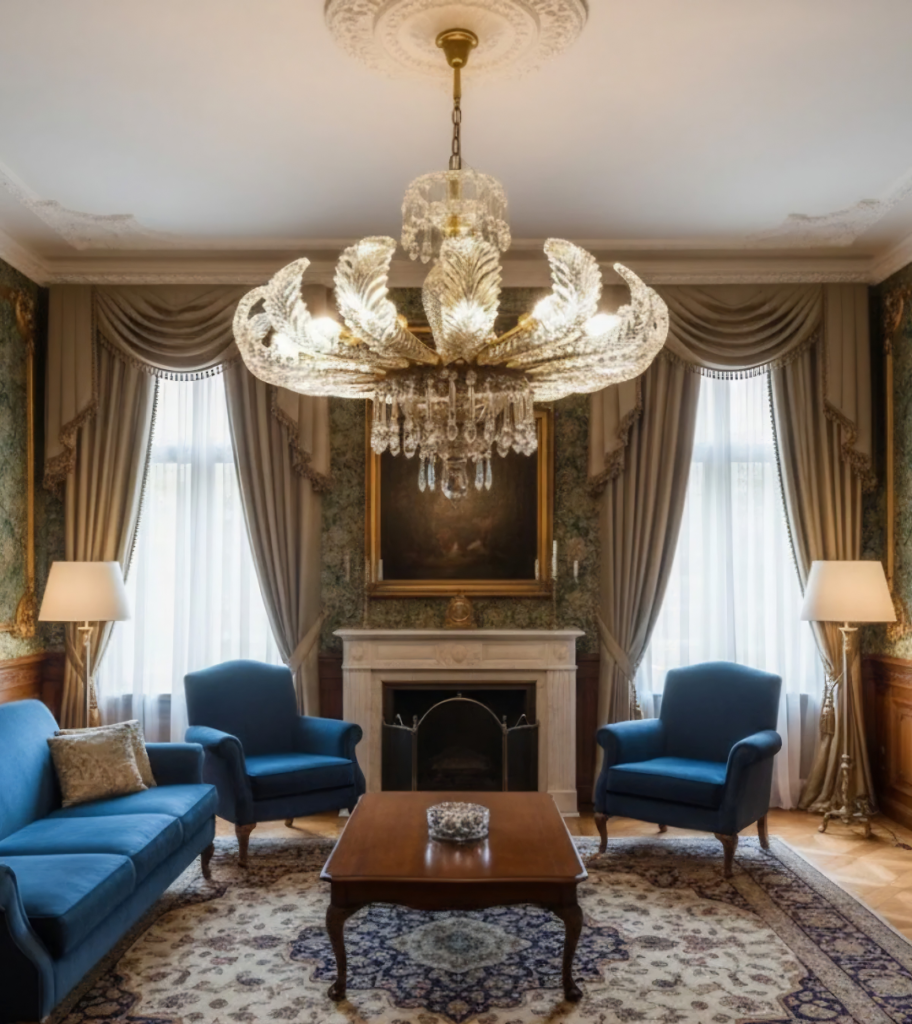
There has been a significant shift in the global design conversation. The frictionless similarities of fast-furniture aesthetics – that particular “muted shade” of Scandinavian beige has left buyers deeply fatigued. They want objects with a memory attached to them. Objects that carry the warmth of a specific hand, culture of a specific place and story of a specific tradition. And Indian craft, long overlooked in favor of mass manufactured cheap alternatives, is answering that hunger with extraordinary precision.
This is not a story of nostalgia. It is a story of timing, taste, and a design ecosystem that has quietly matured over the past decade into something the world is only now beginning to understand.
The Shift
The global interiors market expanded dramatically through the 2010s on the minimalistic taste, a design that is optimized for the clean grid of social media. The result was a decade of identical apartments from Copenhagen to Bangalore, furnished with the same pendant lamps, the same colorless tiles, the same matte-black fixtures.
Indian lighting, by contrast, has always been stubbornly itself. A wooden lantern from Kerala does not photograph the same way twice. A hand crafted brass pendant from Moradabad carries the particular asymmetry of a craftsperson’s breath. These are not errors but the most compelling feature a product can have.
Ask any interior buyer at a trade fair in Milan, Paris, or New York what they’re looking for, and you’ll hear the same word with remarkable frequency: Soul. Not a specification. Not a lead time. Just ‘Soul’.
How India Grew Stronger Standards
Design Integration
A new generation of India-based export studios bridges traditional craft with international standards, translating artisanal techniques into catalogues that speak fluently to global buyers.
Certification & Compliance
Indian exporters have increasingly adopted CE, UL, and other international safety certifications, removing a major friction point for European and American retail buyers.
Digital Discovery
Platforms built around artisan sourcing have made Moradabad brass-smiths and Jaipur block-printers discoverable by a buyer in Stockholm who would never have found them a decade ago.
The Diaspora Effect
The Indian design diaspora — architects, stylists, and curators working across London, New York, and Dubai — has become an influential pipeline placing Indian craft in contexts that confer instant credibility. Not to forget the prestigious trade fairs like Design POV and India Design etc.
THE BIG ENTRANCE INTO LUXURY MARKETS
It is worth noting where the recognition arrived first: at the very top of the market. The high-end hospitality sector, five-star hotels, luxury resorts, flagship restaurants began specifying Indian craft at scale years before the mass retail market caught on. For a hotel brand building a property in the Maldives or Abu Dhabi, a lighting installation that tells a story of Indian craft provenance is not a compromise. It is the brief.

This luxury-first adoption pattern matters because it shifts perception. When a product appears in a JW Marriott lobby or a Condé Nast Traveller “best design hotel” feature, it acquires an associative value that no trade fair stand can manufacture. Indian lighting has spent the last several years accumulating that kind of associative capital, and the downstream effects on mid-market retail buying are now clearly visible.
India has spent centuries making light beautiful. The world has finally arrived at a moment aesthetically, ethically, commercially where it is ready to pay attention. The question is not whether Indian craft will find a global audience. It already has. The question is whether the ecosystem around it will be wise enough to protect what made it worth finding.
Article written for ADL by
Ila Karapurkar Wagle


Add a review
Your email address will not be published. Required fields are marked *